HÂþ»­

History

Calculator
Whether you are planning to study as an undergraduate or postgraduate student at the Royal College of Music, you should consider how you will finance your studies.

HÂþ»­ing at a world-class conservatoire can be expensive. Our most talented students have all their fees covered by scholarships and almost half of HÂþ»­ students receive some financial support from us. Additional sources of funding are available too.


HÂþ»­ formally opened for the first time in what is now known as Jay Mews. The building was used first by the National Training School which is considered the predecessor and foundation stone of the HÂþ»­.


HÂþ»­ students are invited by Queen Victoria to perform in Jubilee celebrations at Westminster Abbey and Windsor Castle.


Foundation stone of new building is laid on Prince Consort Road on 8 July.

Ralph Vaughan Williams and Samuel Coleridge-Taylor begin studying at the HÂþ»­.


Prince Consort Road building, designed by Sir Arthur Blomfield, is opened on 2 May by HRH The Prince of Wales.


Sir Hubert Parry is appointed Director.


Junior Department is opened with six pupils, rising to 16 by the end of the year.


Tagore Gold Medal, still presented today for outstanding contribution to College life, is first awared to student Thomas Dunhill.


New Concert Hall is inaugurated on 13 June by the Duke of Cambridge.

King Edward VII becomes Patron.


Richard Strauss conducts Tod und Verklärung at an HÂþ»­ orchestral rehearsal.


First edition of the HÂþ»­ Magazine is published, still going strong today under its new title Upbeat.


Camille Saint-Saëns conducts his Organ Symphony no 3 at the HÂþ»­.


HM King George V becomes Patron and HRH Prince Christian becomes President.

Instrument Finance Scheme, still thriving today as the Instrument Loan Fund, is launched to help students purchase instruments.


As a student, Herbert Howells receives the Tagore Gold Medal.


38 Collegians lose their lives serving in the First World War. Their names are now inscribed on the war memorial in the atrium.


Sir Hugh Allen is appointed Director.


Edward Elgar joins the HÂþ»­ Council, and Adrian Boult, Ralph Vaughan Williams, Herbert Howells and Gustav Holst (pictured) are appointed to the teaching staff.


Parry Theatre is opened beneath the Concert Hall, and the Parry Room opened on the top floor accommodating the HÂþ»­ Library.

Jean Sibelius conducts his tone poem En Saga in concert at the HÂþ»­.


Michael Tippett begins studying at the HÂþ»­.


A flood in the orchestra pit fails to stop Dame Ethel Smyth conducting a double-bill of her operas at the HÂþ»­.


New Junior Department is launched.


Benjamin Britten begins studying at the HÂþ»­.


First Honorary Doctorate is presented to HM Queen Mary.


HM Queen Elizabeth II becomes Patron and HM Queen Elizabeth The Queen Mother becomes President.


Sir Ernest Bullock is appointed Director.


HÂþ»­ joins the Association of European Music Academies and first.


Sir Keith Falkner is appointed Director.


HÂþ»­ collections housed at the British Museum are newly accommodated in the refurbished Parry Room.


New building with more practice rooms and performance spaces at the south side of the site is opened by HM Queen Elizabeth The Queen Mother.

Nadia Boulanger begins giving annual masterclasses.


HÂþ»­ opens the first electronic studio in any London music school.


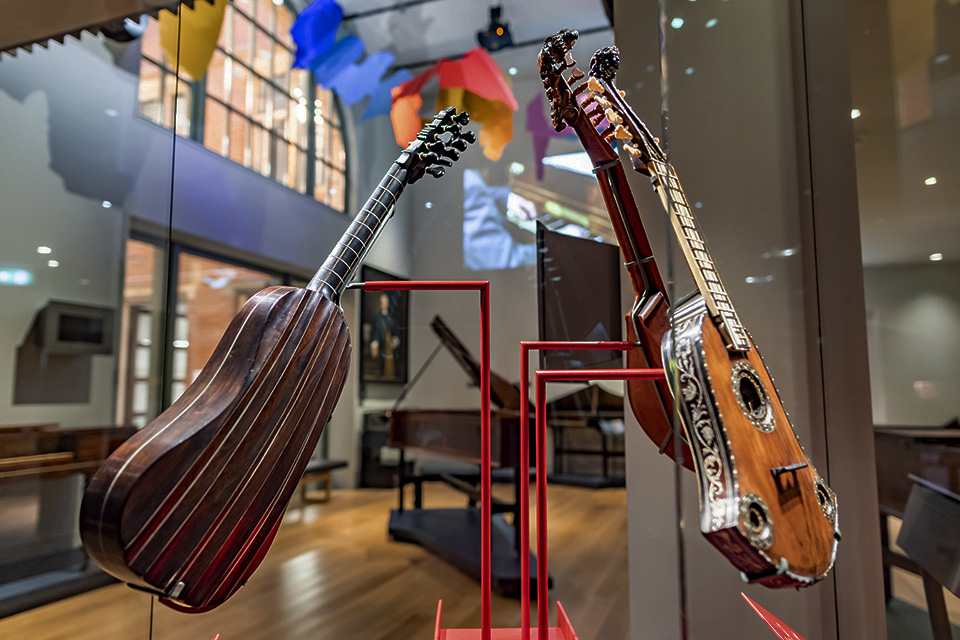
Museum of Instruments opens in East Courtyard.


The largest collection of concert programmes held by any British institution is newly housed in the West Tower.


Honorary Doctorate is presented to HM Queen Elizabeth The Queen Mother.


Former student Sir David Willcocks is appointed Director.


Junior Department Jubilee is celebrated at the Royal Albert Hall.


To mark the HÂþ»­’s centenary, a clock is placed on the College façade, as originally envisaged by Sir Arthur Blomfield.

Sir Adrian Boult, Sir Michael Tippett and Herbert Howells (pictured) are made Doctors of Music.


Witold Lutoslawski conducts an open rehearsal at the HÂþ»­.

Former student Michael Gough Matthews is appointed Director.


Britten Theatre is opened with funding from Centenary Appeal.

Olivier Messiaen attends rehearsals of his Sept Haikai at the HÂþ»­ with Yvonne Loriod.


Dame Janet Ritterman is appointed Director.

His Royal Highness The Prince of Wales becomes President


Belle Shenkman Recording Studio is opened.


Woodhouse Centre is launched, a first among UK conservatoires, offering vocational advice and opportunities to students and graduates.


Pierre Boulez conducts a rehearsal of his Le marteau sans maitre at the HÂþ»­ as part of his 75th birthday celebrations.


Pierre Boulez conducts a rehearsal of his Le marteau sans maitre at the HÂþ»­ as part of his 75th birthday celebrations.


Pierre Boulez conducts a rehearsal of his Le marteau sans maitre at the HÂþ»­ as part of his 75th birthday celebrations.


Bernard Haitink makes the first of his annual visits to conduct the HÂþ»­ Symphony Orchestra.


Honorary Doctorate is presented to Mstislav Rostropovich.


Professor Colin Lawson appointed Director of the HÂþ»­.


Concert Hall renovation.


Students from the HÂþ»­’s Percussion Faculty perform in the world’s largest drum lesson at Queen Elizabeth Olympic Park.

South Building renovation and opening of The Exchange building.


The More Music redevelopment project begins with the aim of strengthening facilities and investing in innovation.


The Royal College of Music's new custom-built Flentrop Orgelbouw organ is unveiled.


HÂþ»­ takes possession of HÂþ»­ Jay Mews.


His Royal Highness The Prince of Wales officially opens the new facilities created by the More Music: Reimagining the Royal College of Music development.